
 Written by
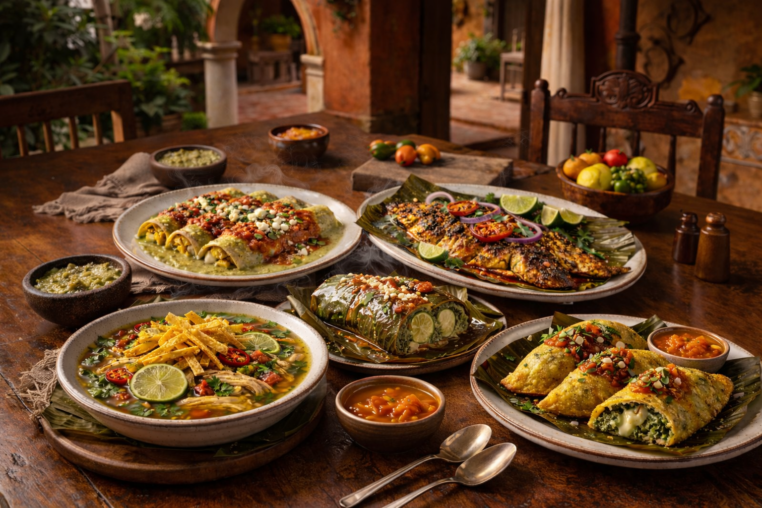
 When Lent arrives in the Yucatán Peninsula, the kitchen doesn’t quiet down. It sharpens.
Across the region, from the colonial streets of Mérida to the breezy coastline of the Riviera Maya, menus shift. Red meat steps aside. Ancient ingredients step forward. And what unfolds is one of the most flavorful seasons to experience authentic Yucatecan cuisine.
If you think “meatless” means limited, you have not eaten in Yucatán during Cuaresma.
Lent here is not about sacrifice. It is about heritage, balance, and ingredients that have been cultivated for centuries.
Let’s go deeper into Lent in Yucatán: 5 Must-Try Traditional Dishes
A Season Rooted in Faith and Flavor
Lent, beginning with Ash Wednesday, is traditionally observed in this predominantly Catholic region by avoiding red meat, especially on Fridays. But instead of feeling restrictive, this tradition opens the door to dishes rooted in Mayan technique and coastal abundance.
You will see:
-
Pumpkin seed sauces that date back to pre-Hispanic times
-
Banana leaf cooking methods are still used today
-
Citrus-forward broths are unique to the peninsula
-
Fresh fish prepared with achiote and sour orange
Restaurants lean into these dishes. Markets fill with fresh herbs, chaya leaves, local citrus, and seafood. Families cook recipes handed down through generations.
It’s a living culinary tradition, not a museum exhibit.
1. Papadzules: The Mayan Classic That Refuses to Fade
Papadzules are often described as simple. That description misses the point.
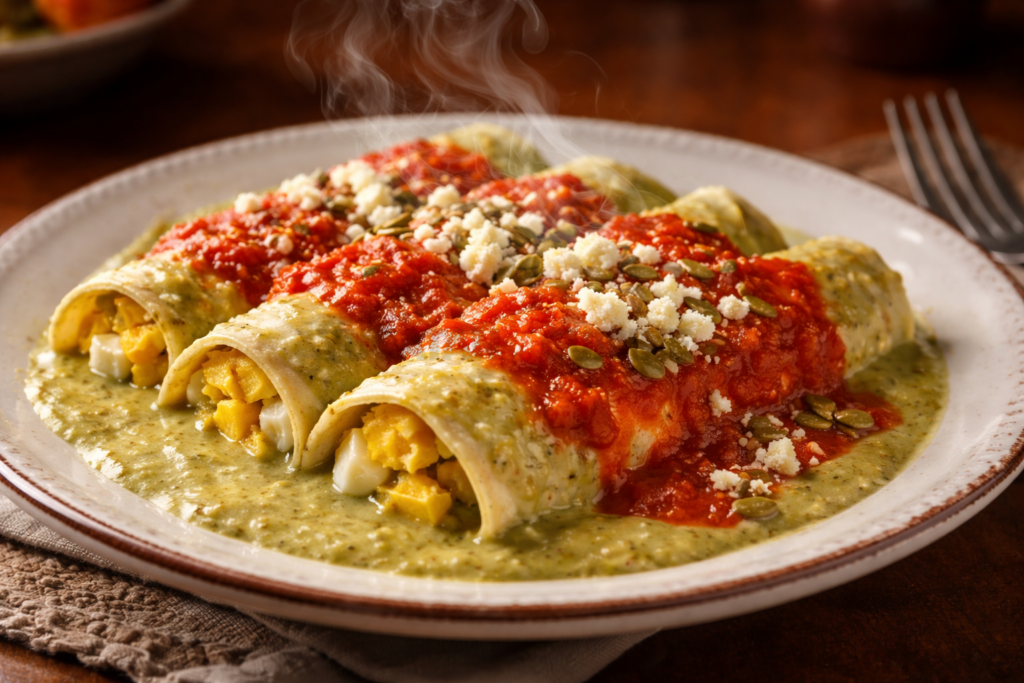
Corn tortillas are dipped in a velvety pumpkin seed sauce, filled with chopped hard-boiled egg, then topped with a light tomato sauce. The flavor is earthy, nutty, slightly herbal, and deeply comforting.
But papadzules are more than comforting. They are ceremonial.
This dish is of Mayan origin and stands as one of the foundational pillars of Yucatecan gastronomy. Historically, it was considered “food for lords” or “food of the nobles.” The word is believed to derive from papak, meaning “to smear generously,” and zul, meaning “to soak,” referring to the tortillas lavishly bathed in pumpkin seed sauce. Another interpretation connects papa, meaning “food,” and dzul, meaning “lord” or “gentleman,” reinforcing its reputation as a dish reserved for the elite.
In pre-Hispanic times, papadzules were not an everyday food. They were luxury fare, likely prepared with eggs from wild birds long before chickens were introduced to the region.
That detail alone should reset how you view this plate.
After the Spanish conquest, the recipe evolved. Chicken eggs replaced wild bird eggs. The dish absorbed new influences and became part of the rich mestizo cuisine that defines Yucatán, Campeche, and Quintana Roo today.
Yet its essence never disappeared.
When you order papadzules in Mérida, you are not just ordering a Lent-friendly dish. You are eating a recipe that once symbolized status, ceremony, and cultural continuity.
That is not simple food.
That is edible history.
2. Brazo de Reina: The Green Jewel of Cuaresma
Brazo de Reina translates to “The Queen’s Arm,” and honestly, it earns the drama.
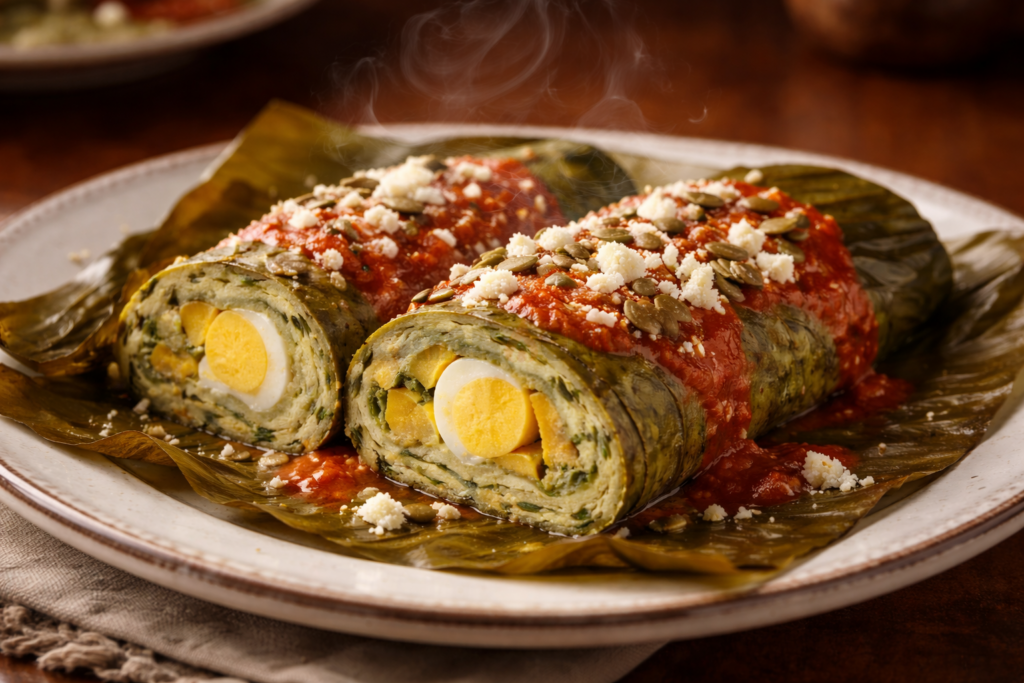
This chaya-based tamal is wrapped in a banana leaf, steamed to perfection, then sliced into beautiful rounds, revealing the egg at the center.
But its deeper name tells an even older story.
In the Mayan language, the dish is known as Dzotobilchay, derived from Ts’o tobil chay, meaning “masa of corn with chaya.” Long before colonial reinterpretations, this was a pre-Hispanic preparation rooted in the agricultural rhythms of the Yucatán Peninsula.
It is an elongated tamal made from corn masa blended with finely chopped chaya leaves and ground pumpkin seed, layered with cooked egg, then wrapped carefully in banana leaf before steaming.
The Spanish-era name “Brazo de Reina” likely emerged later, referencing its cylindrical shape and elegant slicing presentation. Over time, it became associated with refinement, earning the romantic label of a “queen’s tamal.”
But make no mistake. This is Mayan at its core.
Though ancestral in origin, it is traditionally consumed during Lent and Holy Week because it contains no red meat. Like many Yucatecan Cuaresma dishes, it honors both religious observance and indigenous culinary continuity.
The key elements define it:
-
Fresh chaya leaves, a deeply local plant
-
Corn masa, the foundation of Mesoamerican cuisine
-
Ground pumpkin seeds adding body and richness
-
Cooked egg, layered inside
-
A light tomato sauce is poured over each slice
The result is earthy, aromatic, and quietly complex.
Brazo de Reina is not just seasonal comfort food. It is proof that the Yucatán Peninsula preserved its pre-Hispanic techniques while allowing them to evolve gracefully into the mestizo cuisine we celebrate today.
Eat it during Lent, and you are tasting centuries of adaptation wrapped in a banana leaf.
And somehow, it still feels contemporary.
3. Tikin Xic: Coastal Fire and Achiote Magic
Tikin Xic means “dry fish” in Mayan, though what lands on your plate is anything but dry.
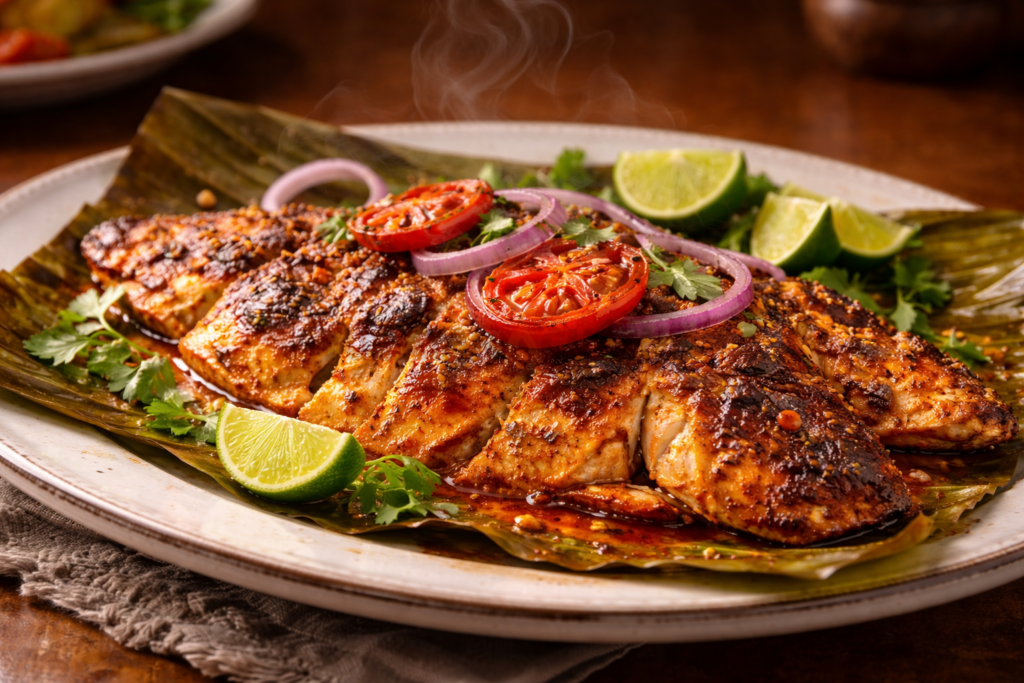
Fresh fish is marinated in achiote, sour orange, garlic, and regional spices. It is wrapped in banana leaves and grilled over an open flame.
But this dish is older than most people realize.
Pescado Tikin Xic originates from the Yucatán Peninsula, with roots deeply embedded in pre-Hispanic Mayan culinary tradition. While it is often associated with Isla Mujeres, historically part of Yucatán and now within Quintana Roo, it has long been an emblematic dish across the entire Yucatecan coastline.
The name itself comes from the Mayan words tikin, meaning “dry” or “exposed,” and xic, meaning “wing” or “fin.” The phrase refers to the way the fish is butterflied open before being seasoned and grilled.
This dish is a clear example of culinary syncretism. Ancient Mayan techniques of cooking fish over open embers merged with ingredients introduced during the colonial period. The use of achiote, known locally as recado rojo, combined with sour orange and Old World spices, reflects that blending of worlds.
Traditionally, firm white fish such as grouper or red snapper is used. It is marinated generously in achiote and citrus, wrapped in banana leaves to retain moisture and fragrance, then cooked slowly over charcoal or wood.
The result is smoky, citrus-forward, slightly earthy, and intensely regional.
Although it was born along the coast, Tikin Xic has become a pillar of Yucatecan gastronomy. Today, it appears not only in beachside palapas but also in some of the region’s most respected restaurants.
It is coastal heritage, ceremonial technique, and colonial evolution all meeting over flame.
Order it by the sea, and you are tasting the peninsula’s history in its purest form.
4. Empanadas de Chaya con Queso: Market Culture at Its Best
You do not need fine dining to experience Cuaresma properly.
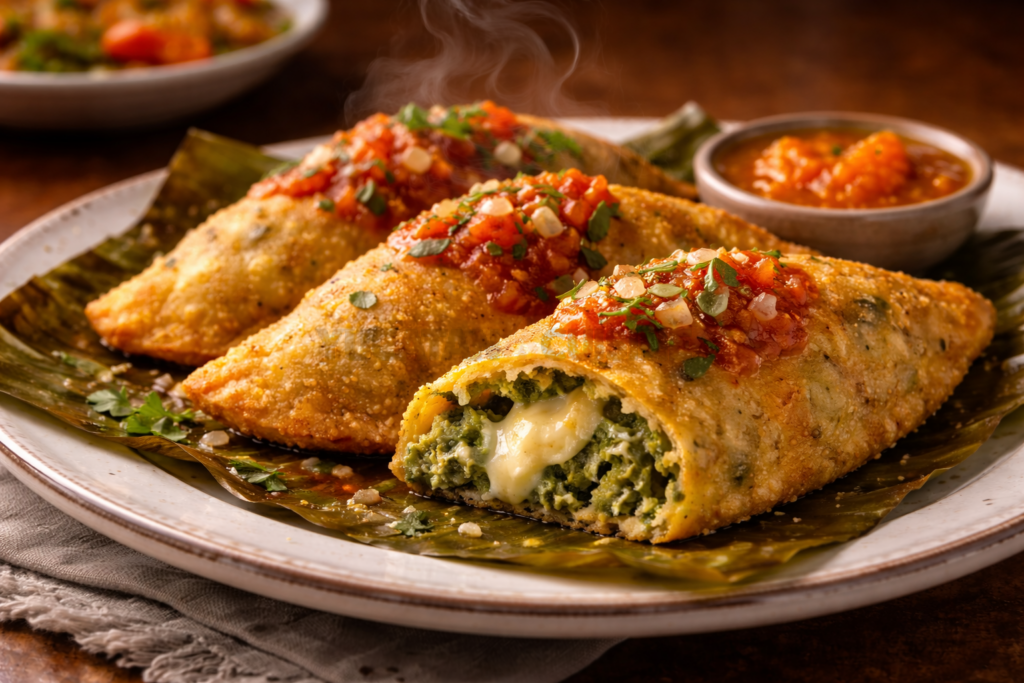
Walk into a market in Mérida, and you will find empanadas stuffed with chaya and local cheese, fried until golden and slightly crisp on the outside.
But these empanadas carry more history than their humble appearance suggests.
Empanadas de chaya con queso originate in the Yucatán Peninsula and are considered a classic antojito of Yucatecan gastronomy. They represent culinary mestizaje at its finest, blending indigenous Mayan ingredients with European influence.
The key ingredient is chaya, often called “Mayan spinach,” a nutrient-rich native plant deeply rooted in regional cooking. The filling traditionally includes queso de bola, better known internationally as Edam cheese, introduced through European trade routes and embraced by Yucatecan kitchens.
The base is corn masa mixed with finely chopped chaya leaves, shaped and filled with queso de bola, then traditionally fried until crisp and golden.
This dish is a clear cultural fusion. The empanada technique arrived with the Spanish, while the corn masa and chaya are unmistakably Mayan. Together, they created something entirely Yucatecan.
They are commonly served with a light tomato sauce and fiery chile habanero, because this is still the Yucatán and subtlety has limits.
While some modern variations substitute Oaxaca cheese, queso de bola remains the most iconic and regionally characteristic choice.
What looks like simple street food is actually centuries of trade, adaptation, and agricultural knowledge folded into corn dough.
Eat them in a local market, and you are participating in a living tradition, not just grabbing a snack.
And yes, they are dangerously easy to order in multiples.
5. Sopa de Lima: The Citrus Soul of Yucatán
Sopa de Lima is perhaps the most iconic dish in Yucatán.
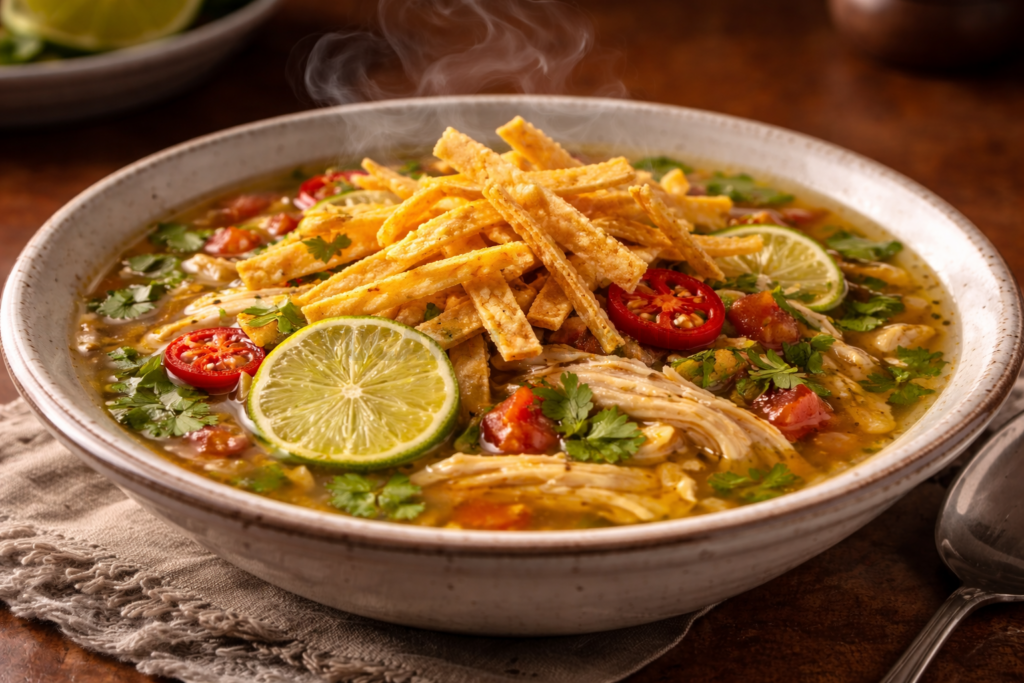
During Lent, lighter versions highlight the fragrant local lime and delicate broth. Crispy tortilla strips float on top. The aroma alone is unmistakable.
But this soup is more than comfort. It is a culinary evolution.
Sopa de Lima originated in the Yucatán Peninsula and emerged from the cultural blending that defined the colonial period. It reflects the meeting of Mayan culinary tradition, particularly the preparation of broths using turkey or chicken, with ingredients introduced by the Spanish, most notably the region’s distinctive local lime.
At its core, it is a fusion dish.
Its roots lie in pre-Hispanic Mayan cooking methods, where poultry-based broths were common, later refined through Spanish influence and ingredient adaptation. The defining element is the Yucatecan lima agria, a unique local citrus variety that gives the soup its soft, aromatic acidity.
Unlike standard limes, this regional lima is less sharply sour and more fragrant, creating the signature balance of savory, slightly sweet, and citrus-forward flavor.
Although Sopa de Lima is deeply traditional, some culinary historians suggest that the modern version widely recognized today was refined or popularized in Mérida around 1946 by a cook known as Maestro Katún.
What defines the dish is its light chicken broth, subtle sweet-sour citrus profile, and the contrast of crispy fried tortilla strips added just before serving.
It is elegant without being complicated. Comforting without being heavy.
More than anything, it remains one of the most representative dishes of Yucatecan gastronomy.
If papadzules speak to ancient nobility and Tikin Xic to coastal fire, Sopa de Lima is the everyday heartbeat of the peninsula.
And during Lent, it feels especially right.